The study paper by Melbourne-based think-tank Australia India Institute titled 'The G20: Challenges and opportunities Ahead', said following Prime Minister Narendra Modi's visit to the US and his talks with US President Barack Obama, India may finally sign the agreement.
India finalised a free trade agreement with the UK, its 16th so far as the country aimed at boosting bilateral trade and investments. The other regions and countries with which India has signed such agreements include the four-nation European bloc EFTA, Japan, Korea and Australia.
The decision preceded long hours of tense negotiations and last minute hiccups from Argentina and Pakistan

Commerce minister makes strong case for food subsidy to poor.

During the 18th BRICS Summit in New Delhi, Chinese President Xi Jinping and Prime Minister Narendra Modi held a bilateral meeting, outlining a four-point approach for the steady and long-term development of China-India relations. The leaders stressed strategic understanding, win-win cooperation, mutual respect, and inclusive multilateral engagement, reaffirming their commitment to resolving the boundary question and addressing economic concerns. They also discussed global challenges and strengthening people-to-people ties.

Prime Minister Narendra Modi conveyed to Chinese President Xi Jinping that peace and tranquillity along the frontier remains an "essential" basis for the development of India-China relations, even as the two leaders welcomed "steady progress" in bilateral ties during their talks on the sidelines of the BRICS summit.

Prime Minister Narendra Modi has made it clear that the agreement on food security and trade facilitation will have to go hand-in-hand.

Japan is deepening its defence relationship with India while simultaneously expanding its economic, infrastructure and security engagement with countries around India -- particularly Bangladesh. The result is an emerging Japanese conception of South Asia in which India remains the strategic anchor, but the geography surrounding India is becoming increasingly important, points out Varun Arya.
The success of the Bali Ministerial meeting of the World Trade Organisation in the first week of December in 2013 will mean that in 2014 countries will identify areas for early conclusion so that within the next two years, the Doha Agenda of the WTO -- which has remained in a limbo for long -- can be concluded.
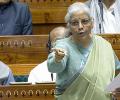
Finance Minister Nirmala Sitharaman launched a strong attack on Rahul Gandhi and the Congress party, accusing them of compromising India's interests on the world stage and selling out farmers and the poor during their time in power.

Notwithstanding the economic complementarities and the host of agreements for deepening economic relation on a host of areas, both sides share common viewpoints on the foreign policy domain and seek common grounds to serve as a counterweight to China, notes Dr Rajaram Panda.
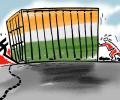
India needs a National Trade Policy Council, chaired by a minister who reports directly to the PM, says Jayanta Roy, former economic advisor to the Union commerce ministry.

Sitharaman cancels Myanmar trip at last moment citing launch of Modi's Jan Dhan Yojana.
It is learnt that the US had recently presented two separate papers to India.

The India government needs to work on policies that can enhance global trade.

A day after a breakthrough deal between India and the US on food security related issues, the WTO on Friday said there was a "high probability" of reaching an agreement within two weeks on the stalled Bali package to facilitate easier global trade flows.

The Cabinet on Thursday approved the stand taken by India at the recently concluded WTO meeting in Bali which endorsed New Delhi's point of view with regard to food security plan and trade facilitation pact.
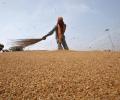
Trade ministers from 162 WTO countries will gather in Kenya's capital from Dec. 15-18 to work on an agreement to liberalise global trade.
The Doha Round of talks of the World Trade Organisation (WTO) faces a new challenge and if some statements emanating after the General Council meeting on July 25 at Geneva are to be taken at face value, this could derail the process of trade liberalisation through a multilateral route for some time.

At the meeting of the 160-member World Trade Organisation in Geneva on Friday, India demanded a halt to the trade facilitation timetable till a permanent solution on public stockholding for food security is found.
India will find it difficult to support new global customs rules without "an assurance and visible outcomes" that a permanent solution is being negotiated over its concerns about public food stockholdings, the trade minister said on Friday.

These concrete steps should include measures to address any number of pressing concerns, including prohibitively high tariffs and discriminatory forced localization requirements that are blocking US exports of a wide range of products.
This will be an area where bilateral or regional trade pacts may not be able to perform well.
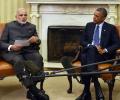
India's food security concern at WTO needs solution: Modi

Still, the failure of the agreement should signal a move away from monolithic single undertaking agreements that have defined the body for decades.
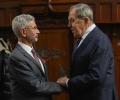
India's External Affairs Minister S Jaishankar addressed the Shanghai Cooperation Organisation (SCO) Council of Heads of Government meeting, advocating for a 'zero tolerance' approach to terrorism and emphasizing the need for the SCO to adapt to the changing global landscape.
I'...additional concessions, such as opening government procurement, reducing agricultural subsidies, weakening patent protections, and allowing unrestricted data flows -- demands India has resisted for decades.'

India on Wednesday blocked an attempt by a group of WTO countries led by China to push an investment facilitation pact in the agenda of the ministerial conference here, a move which may ensure that the proposal is unlikely to be part of the final outcome document, an official said. The 13th Ministerial Conference (MC-13) of the World Trade Organisation (WTO) is underway. Commerce and Industry Minister Piyush Goyal, along with his team, is here for the meeting, which started on February 26.
The US wants India to recognise internationally accredited labs, harmonise labelling requirements and the validity period of test reports and certification with global practices, and eliminate retesting requirements.

Under the TFA, a proposal of developed countries, WTO members are negotiating ways to facilitate trade, simplify and harmonise customs rules and reduce transactions cost. Although India is willing to negotiate on TFA, it has raised few concerns over the proposed agreement.

India has said it will take all steps to protect its national interests and ensure comprehensive national security in all domains after Pakistan and Saudi Arabia signed a strategic defence pact.
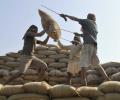
The WTO has fixed an external reference price (ERP) for rice at Rs 3.52 per kg
New Delhi to push for services trade facilitation & food stockpiling.
The differences between the rich and developing nations have always been at the core of the World Trade Organisation, set up in 1995 to facilitate greater trade flows across the world, and it came as a major breakthrough when the US and India reached a deal over food security issues in 2014.

The US has come up with a new WTO proposal to find a permanent solution to food stockpiling.
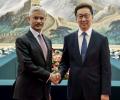
India and China should build on 'good progress' in normalising the bilateral ties to address border-related issues including de-escalation, and it is essential to avoid 'restrictive trade measures and roadblocks', External Affairs Minister S Jaishankar said on Monday during talks with his Chinese counterpart Wang Yi.

Why should India buy olives from Europe when it could do so from the world's largest producers?
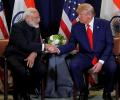
'If we cannot conclude a trade deal, both sides are likely to take trade actions that will further impair our government-to-government ties.'
Refusing to budge from its tough stand on food security issues, India pressed for a fair and balanced outcome of the WTO ministerial meeting in Bali.
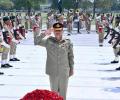
Sections in the US State Department and Pentagon have always felt more comfortable dealing with all powerful Pakistani generals instead of elected civilians, points out Rana Banerji, who headed the Pakistan desk at RA&W.
